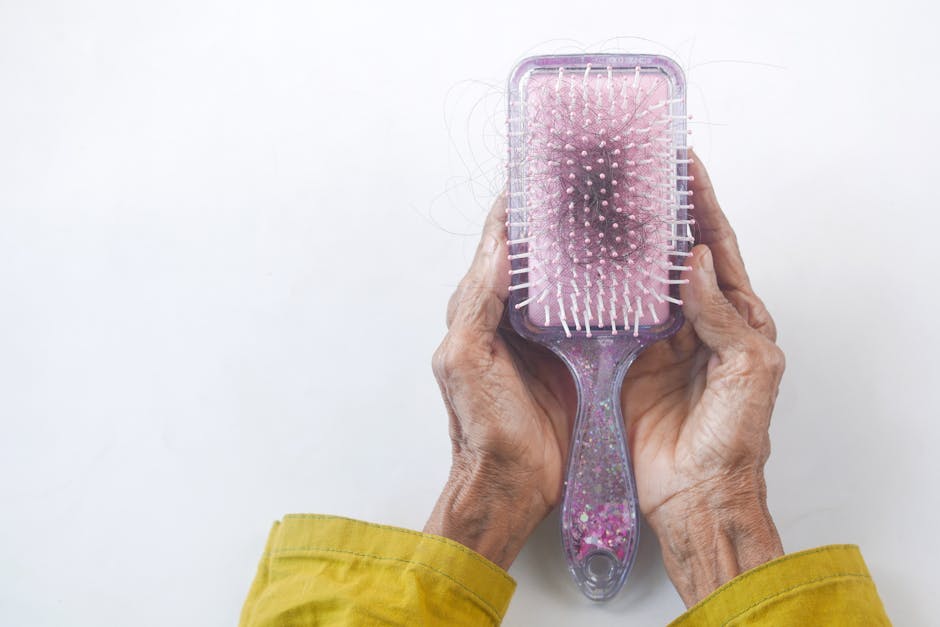
Female hair loss is consistently undertreated and frequently misdiagnosed, in part because it presents differently than male pattern baldness and in part because the six most common causes are distinct enough to require different evaluation and treatment approaches. Treating telogen effluvium the same way you would treat female pattern hair loss does not work. Treating thyroid-related shedding without addressing the underlying thyroid condition definitely does not work.
Getting the right treatment starts with identifying which of these causes you are actually dealing with.
1. Female Pattern Hair Loss
Female pattern hair loss (FPHL), also called androgenetic alopecia, is the most common cause of hair loss in women, affecting approximately 40% of women by age 50. The mechanism is similar to male pattern baldness: androgen hormones act on genetically susceptible hair follicles, causing progressive miniaturization.
The presentation differs from male pattern baldness in a specific way. Rather than receding at the temples, FPHL typically shows as diffuse thinning at the crown and top of the scalp, with the hairline usually preserved. The Ludwig Scale classifies FPHL into three stages: diffuse thinning that is most evident on top, more pronounced diffuse thinning visible without parting the hair, and advanced thinning approaching total loss at the crown with preserved hairline.
What helps: Minoxidil is the first-line treatment for FPHL, FDA-approved in both 2% and 5% formulations for women. The 5% foam appears more effective with similar tolerability to the 2% solution. Efficacy data shows meaningful reduction in hair loss and some regrowth in a majority of women who use it consistently for 12+ months.
Spironolactone, an aldosterone antagonist with anti-androgenic properties, is frequently prescribed off-label and has reasonable evidence for slowing FPHL progression in pre-menopausal women. It is not appropriate for women who are or may become pregnant.
2. Telogen Effluvium
Telogen effluvium is temporary, diffuse shedding triggered by a physiological stressor. The mechanism is the same as what happens with minoxidil’s initial shedding: a large number of follicles simultaneously shift from the anagen growth phase to the telogen resting phase, then shed several months later.
The characteristic feature is the delay. Telogen effluvium typically presents as dramatically increased shedding 2-4 months after the triggering event. Common triggers include major illness (including COVID-19, which has been extensively documented as a trigger), surgery, significant weight loss, severe emotional stress, major dietary change, and childbirth.
What helps: Telogen effluvium is usually self-resolving. Once the trigger is removed and the body stabilizes, follicles return to normal cycling and shedding returns to baseline within 6-12 months. Treatment is primarily supportive: addressing the underlying trigger, nutritional assessment to rule out deficiencies, and waiting.
Women who experience extremely stressful events and notice increased shedding starting 2-3 months later should understand that this is likely telogen effluvium, that the shedding peak typically occurs around month 4-5 and then tapers, and that their hair density should restore without intervention. Minoxidil may accelerate recovery but is not necessary for most cases.
3. Thyroid Dysfunction
Both hypothyroidism and hyperthyroidism can cause significant diffuse hair loss. The thyroid hormone pathway is involved in the regulation of hair follicle activity, and disruption in either direction can push follicles into a prolonged resting phase.
Thyroid-related hair loss tends to be diffuse across the entire scalp, not concentrated at the crown the way FPHL is. It is often accompanied by other symptoms: fatigue and cold intolerance in hypothyroidism, anxiety and heat intolerance in hyperthyroidism. But hair loss can sometimes be the presenting complaint before other symptoms become obvious.
What helps: Treating the underlying thyroid disorder. TSH (thyroid-stimulating hormone) is the standard initial test, with freeT4 added if TSH is abnormal. Hair loss from thyroid dysfunction typically resolves or substantially improves once levels are normalized through appropriate medication, though it can take 6-12 months of stable thyroid function for the hair cycle to normalize.
Request thyroid testing if you have diffuse shedding without a clear trigger and particularly if it is accompanied by other unexplained symptoms.
4. Iron Deficiency
Low iron is one of the most consistently overlooked causes of hair loss in women, particularly pre-menopausal women with heavy periods. Iron is required for DNA synthesis in rapidly dividing cells, which includes hair follicle cells.
The key measurement is serum ferritin, the stored form of iron, rather than hemoglobin alone. Women can have normal hemoglobin but depleted ferritin stores, and ferritin depletion is associated with hair loss even in the absence of frank anemia. Research published in the Journal of the American Academy of Dermatology suggests that ferritin levels below 40-70 ng/mL may be associated with increased hair shedding, even when other iron markers are normal.
This means a doctor saying “your iron is fine” after checking only hemoglobin or a complete blood count is not the complete picture. Ask specifically for ferritin.
What helps: Iron supplementation if ferritin is low, combined with addressing the underlying cause of the deficiency (often heavy menstrual bleeding, which can be treated separately). Hair improvement from iron repletion typically takes 3-6 months and is often modest even when deficiency was contributing.
5. Postpartum Shedding
Postpartum shedding is essentially a form of telogen effluvium specific to childbirth, but it warrants separate discussion because it is extremely common, frequently alarming, and almost always self-resolving.
During pregnancy, elevated estrogen levels prolong the anagen phase, meaning less hair sheds than normal. Many women notice their hair looking thicker during pregnancy. After delivery, estrogen drops sharply and the follicles that stayed in anagen through pregnancy synchronously shift to telogen. The result is dramatic shedding starting 2-4 months postpartum, typically peaking around month 4-5 and continuing until month 6-8.
Most women are back to their pre-pregnancy hair density by 12 months postpartum. Some see a slight permanent reduction, which may reflect FPHL being unmasked by the pregnancy-related changes.
What helps: Understanding the timeline, which reduces the anxiety that can accompany dramatic shedding, and ruling out nutritional deficiencies common postpartum, particularly iron, which can compound the shedding. Minoxidil is not recommended during breastfeeding. The primary treatment is reassurance, nutritional support, and time.
6. Alopecia Areata
Alopecia areata is an autoimmune condition in which the immune system attacks hair follicles, causing patchy, often sudden hair loss. It can present as one or more distinct circular bald patches on the scalp, a pattern immediately distinguishable from the diffuse thinning of FPHL or telogen effluvium.
In more severe forms, it progresses to alopecia totalis (complete scalp hair loss) or alopecia universalis (complete body hair loss). Most cases are the limited patchy form.
What helps: Alopecia areata has its own treatment pathway, quite separate from other hair loss causes. Intralesional corticosteroid injections are the standard first-line treatment for limited patchy disease. JAK inhibitors, a newer class of medications including ritlecitinib and baricitinib, have shown significant efficacy in clinical trials for moderate-to-severe alopecia areata and represent a meaningful advance in treatment options.
Alopecia areata requires evaluation by a dermatologist who can distinguish it from other causes and prescribe appropriate treatment.
What Blood Tests to Request
If your hair loss does not have an obvious cause, these tests form the basis of a reasonable initial evaluation:
- Complete blood count (CBC) and ferritin (not just hemoglobin)
- TSH and freeT4
- Basic metabolic panel
- Total testosterone and DHEA-S if FPHL is suspected and hormonal context is unclear
- Vitamin D (deficiency is frequently found alongside hair loss, though causality is debated)
Present the results to a dermatologist rather than trying to interpret them alone. Pattern of loss, scalp health, and family history all contribute to diagnosis alongside lab values.