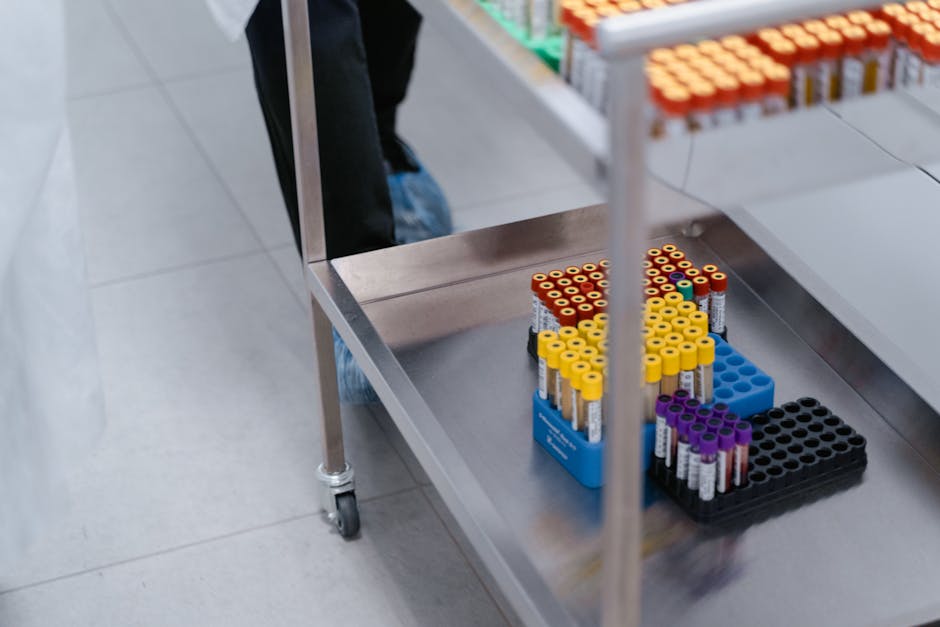
Direct-access lab testing allows individuals to order blood tests without a physician referral, pay directly, and receive results through an online portal. This model serves people who want to monitor specific biomarkers, testosterone, lipids, thyroid function, hormones, without going through their primary care physician, those who are uninsured or underinsured, and those who are monitoring their own health alongside or between clinical appointments.
How Direct-Access Lab Testing Works
Order online: Services including Ulta Lab Tests, Any Lab Test Now, LabCorp OnDemand, Quest Diagnostics MyQuest, and others allow you to select specific tests, pay upfront, and receive a lab requisition.
Draw at a local lab location: Most services use national lab networks (LabCorp, Quest) and their draw sites for blood collection. You bring your requisition to the nearest draw site (often a local Quest or LabCorp patient service center) and have blood drawn by a phlebotomist.
Results delivered online: Results typically arrive in your online account within 1-5 business days depending on the test.
No physician review by default: Unlike ordering through a doctor’s office, you receive raw results without automatic physician interpretation. Some services offer optional clinician consultation for result review at an additional charge.
What You Can Order Without a Doctor
The availability of specific tests varies by state, some states (New York, New Jersey, Maryland, and a few others) restrict direct-access testing more than others. In most states, you can directly order:
Complete metabolic panel (CMP): Kidney and liver function, glucose, electrolytes, approximately $15-30 through discount services.
Complete blood count (CBC): Red and white blood cells, platelets, approximately $10-20.
Lipid panel: Total cholesterol, LDL, HDL, triglycerides, approximately $15-25.
Hormone panels: Total testosterone, free testosterone, estradiol, SHBG, FSH, LH, prolactin, each $25-60, or bundled panels for $75-150.
Thyroid panel: TSH, free T4, free T3, $30-80 depending on what is included.
Ferritin: Specifically ordered rather than through a CBC, approximately $25-40.
HbA1c: Diabetes marker, approximately $20-30.
PSA: Prostate-specific antigen, approximately $25-40.
Cost Comparison
Direct-access lab prices are typically 50-80% lower than what is billed to insurance before negotiated rates and significantly lower than retail lab pricing. However, if you have insurance that covers lab work, insurance billing may produce lower out-of-pocket cost than paying direct access prices for the same tests.
The comparison depends on:
- Whether you have met your deductible (if not, you pay retail rates billed to insurance, which are often higher than direct-access prices)
- Your copay or coinsurance rate after meeting the deductible
- Whether your physician’s lab order goes to an in-network or out-of-network lab
For people who have not met their deductible or who are monitoring biomarkers on a frequency their insurer considers unnecessary (for example, monthly testosterone monitoring when insurance will cover quarterly), direct-access testing is typically more economical.
At-Home Sample Collection
Several services offer at-home blood collection:
Dried blood spot cards: A small lancet prick to the finger, collected onto a card, mailed to the lab. Limited to specific tests (some hormones, glucose, cholesterol). Less accurate for some analytes than venous blood draw.
At-home phlebotomy: Services including Getlabs and LabCorp’s Pixel platform offer in-home blood draws by a certified phlebotomist at a premium of $50-150 above standard lab pricing.
Saliva-based hormone testing: Some services (DUTCH test, ZRT Laboratory) offer saliva-based hormone testing, which is useful for measuring diurnal cortisol patterns. Saliva testing for sex hormones (testosterone, estradiol) is less validated than serum testing and is not interchangeable with standard blood results for clinical diagnosis.
Limitations of Self-Ordered Testing
No clinical context: A result outside the reference range that you receive without a clinical conversation lacks the context to determine significance. An elevated testosterone on a direct-access test may be meaningless, or it may indicate polycystic ovary syndrome, the number alone does not tell you which.
Timing and conditions: For sex hormones especially, test conditions (time of day for morning testosterone, day of menstrual cycle for female hormones) significantly affect results. Self-ordering without knowing these conventions can produce misleading numbers.
Cascade testing: Abnormal results often require follow-up tests to characterize the finding. Without a physician managing this cascade, patients may order unnecessary additional tests or miss necessary ones.
For interpreting the results you receive from direct-access or physician-ordered testing, see How to Read Your Own Lab Results: A Guide for Health-Conscious Adults.