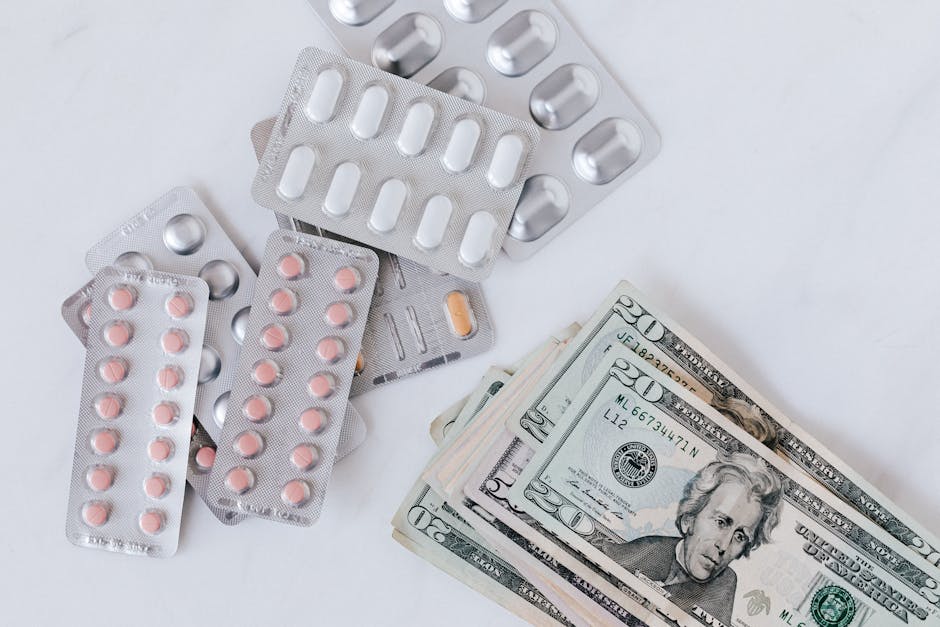
Healthcare costs in the United States vary by a factor of 10 or more for the same service at different facilities, the same medication at different pharmacies, and the same procedure billed to different insurers. Most patients do not know that prices are neither fixed nor transparent, and that significant savings are available without compromising care quality. This guide covers the primary tools for reducing medication and healthcare costs.
Prescription Cost Reduction
GoodRx and comparable discount programs: As covered in GoodRx vs. Insurance: When the Discount Card Beats Your Coverage, GoodRx negotiates below-retail prices through PBM contracts. It works best for generic medications that have been off-patent for years. Check GoodRx prices before paying insurance copays, for generic medications, GoodRx sometimes beats insurance.
Cost Plus Drugs (costplusdrugs.com): Mark Cuban’s pharmacy offers generic medications at cost + 15% markup + $3 dispensing fee. For a growing list of generics, it is the lowest available price. It requires mail-order and has a more limited formulary than GoodRx’s network, but for maintenance medications it can save substantially.
Manufacturer savings cards: For branded medications including Wegovy, Zepbound, and testosterone gels, manufacturers offer savings cards that reduce copays for commercially insured patients to as little as $0-25 per month. These typically do not apply to Medicare, Medicaid, or uninsured patients. Search “[drug name] savings card” or “[drug name] patient assistance” to find these programs.
Patient assistance programs (PAPs): For patients who cannot afford their medications and do not have insurance coverage, pharmaceutical manufacturers offer free or reduced-cost medications through PAPs. Eligibility is income-based. The Partnership for Prescription Assistance (pparx.org) aggregates programs from multiple manufacturers.
State pharmaceutical assistance programs (SPAPs): Many states offer programs supplementing Medicare or providing drug assistance to residents below certain income thresholds. These vary significantly by state, your state’s department of health or aging lists available programs.
Reducing Healthcare Visit Costs
Community health centers: Federally Qualified Health Centers (FQHCs) provide primary care on a sliding fee scale based on income. They accept Medicare and Medicaid and offer services regardless of ability to pay for qualifying patients. Find your nearest FQHC at findahealthcenter.hrsa.gov.
Direct primary care membership: For patients who use primary care regularly, a DPC membership ($50-100/month) often costs less than equivalent insurance copays for the same number of visits. Labs at wholesale cost through DPC practices are typically $10-30 versus $100-200 retail. This is covered in detail in Direct Primary Care: What It Is and Whether It Makes Sense for You.
Medical billing advocates: For significant unexpected medical bills from hospitalizations or procedures, medical billing advocates (patient advocates, medical billing consultants) negotiate bills on your behalf, typically charging 20-35% of the savings achieved. For bills above $2,000-3,000, professional negotiation often produces better outcomes than DIY negotiation.
Hospital financial assistance (charity care): Nonprofit hospitals are required by federal law to have charity care programs for uninsured or underinsured patients. For emergency and hospital care, requesting a financial assistance application before paying or entering a payment plan is worth doing. Income thresholds vary by hospital but often extend to 300-400% of the federal poverty level.
Lab Test Cost Reduction
Direct-access lab testing (covered in At-Home and Direct-Access Lab Testing) allows ordering tests at 50-80% below retail lab pricing. For monitoring testosterone, lipids, or thyroid function on a regular basis outside of what insurance considers medically necessary frequency, direct-access pricing is often the most economical option.
Health savings accounts (HSAs): For patients with high-deductible health plans, HSA dollars can pay for eligible medical expenses, prescriptions, copays, lab tests, and many OTC health products, with pre-tax dollars. This effectively reduces healthcare costs by your marginal tax rate (20-37% for most users).
Negotiating Bills After Care
Ask for itemized bills: Hospital and facility bills often contain errors. Request an itemized bill (not just the summary) and review for duplicate charges, billing codes for services not received, and unbundled charges for items that should be grouped.
Ask about self-pay discounts: Many providers offer discounts for prompt cash payment, separate from insurance negotiation. Asking “what is the self-pay or cash price?” before or after service sometimes produces prices below the insured rate.
Payment plans without interest: Before paying a medical bill or entering a credit-based payment arrangement, ask the provider directly for an interest-free payment plan. Most providers offer them for balances above $500, interest-free payment over 12-24 months costs nothing extra.
For costs specific to GLP-1 medications, see How Much Does Semaglutide Cost Without Insurance?. For TRT cost comparison, see Testosterone Injections vs. Gel: Which Delivery Method Is Better?.