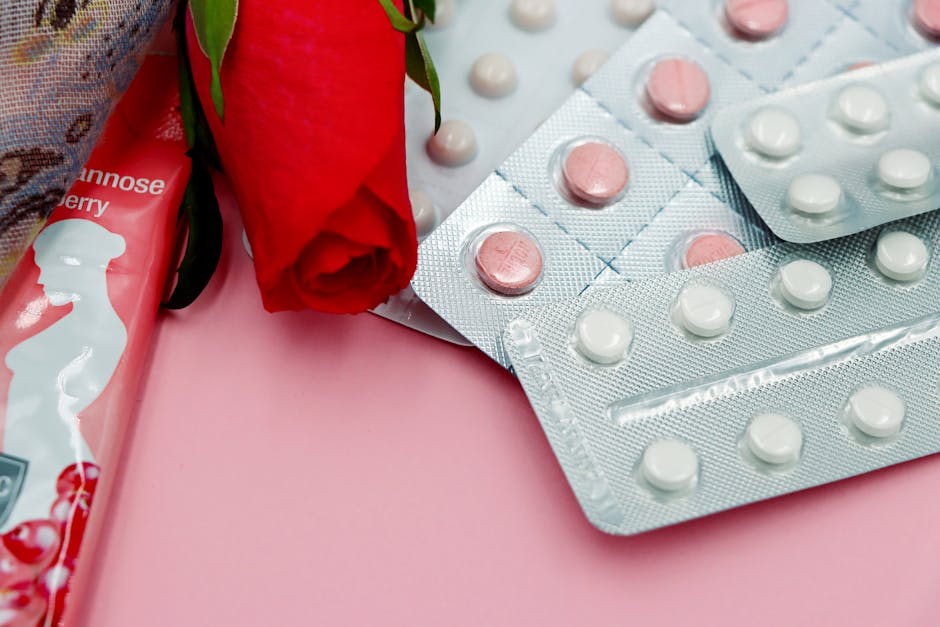
Spironolactone is an aldosterone antagonist originally developed as a diuretic for heart failure and hypertension. In women’s dermatology and endocrinology, it is used extensively off-label for androgen-mediated conditions: acne, female pattern hair loss, and hirsutism. It works because, at doses used for these indications, it blocks androgen receptors in the skin and hair follicles, reducing testosterone’s stimulating effect on sebaceous glands and hair follicle miniaturization.
Spironolactone is not FDA-approved for acne or hair loss, both uses are off-label. It is FDA-approved for hypertension and heart failure. Despite the off-label status, it is one of the most commonly prescribed medications in dermatology for women with hormonal skin and hair conditions.
Mechanism of Action in Androgen-Mediated Conditions
Spironolactone’s androgen-blocking effect operates through two pathways:
Androgen receptor blockade: At doses of 50-200 mg daily, spironolactone competes with testosterone and DHT at androgen receptors in target tissues. By occupying the receptor without activating it, it prevents testosterone and DHT from exerting their usual effects in the skin and scalp.
Reduced androgen production: Spironolactone reduces adrenal production of testosterone and DHEA-S at higher doses. This adds a production-suppressing effect on top of the receptor blockade.
The net result: sebaceous glands produce less sebum (reducing acne), and hair follicle miniaturization from androgen stimulation is slowed or halted.
Evidence for Acne
Spironolactone is most commonly used for adult female acne, particularly the jaw-line and lower-face pattern that is associated with androgen excess. Multiple retrospective studies and smaller randomized trials support its effectiveness.
The SAHA trial published in JAMA Dermatology (2023) was one of the first large randomized controlled trials of spironolactone for acne. It enrolled 410 women with moderate-to-severe acne and found that spironolactone 50-100 mg daily produced significantly greater reduction in acne lesion counts than placebo over 24 weeks, with a safety profile consistent with existing knowledge.
Response typically begins at 3-6 months. The dose-response curve is modest: 50 mg produces meaningful improvement in most women, with additional benefit at 100 mg in some, and the 200 mg dose offering additional benefit with more side effects.
Evidence for Female Pattern Hair Loss (FPHL)
The evidence for spironolactone in FPHL is less strong than for acne, smaller studies, fewer randomized trials, but clinically it is widely used for this indication.
A 2015 randomized trial in the British Journal of Dermatology compared spironolactone 200 mg daily to minoxidil 5% for FPHL over 12 months. Both groups showed improvement in hair density; the groups did not differ statistically, suggesting comparable efficacy. This is frequently cited as supporting equivalence between the two approaches, though the trial was not powered to detect small differences.
For women with FPHL who also have features of androgen excess (acne, hirsutism), spironolactone may address both simultaneously. For women with FPHL without androgen excess, minoxidil may be the more directly supported choice.
Evidence for Hirsutism
Hirsutism, excess hair growth in androgen-sensitive areas, is among spironolactone’s strongest indications. Multiple randomized trials show improvement in Ferriman-Gallwey scores (the clinical hirsutism assessment) with spironolactone over 6-12 months. The effect is dose-dependent, with 200 mg daily producing the most reliable results and 100 mg being effective for mild-to-moderate cases.
Response is slow because hair already present in androgen-sensitive areas does not immediately disappear, it must be replaced by finer, less pigmented growth across multiple hair cycles. Meaningful improvement takes 6-12 months of consistent treatment.
Side Effects and Contraindications
Hyperkalemia: Spironolactone retains potassium. In young, healthy women with normal kidney function, clinically significant hyperkalemia is rare, a 2015 retrospective analysis in JAMA Dermatology found that potassium monitoring in healthy young women without kidney disease or medications affecting potassium is not necessary per the clinical evidence. Women with kidney disease, older women, or those taking ACE inhibitors or ARBs should have potassium monitored.
Diuretic effects: At doses above 100 mg, increased urination is common and sometimes disruptive.
Menstrual irregularity: Spironolactone can cause irregular bleeding in some women. It is typically used alongside oral contraceptives in women who need contraception, as the combination regularizes the menstrual cycle.
Teratogenicity: Spironolactone is absolutely contraindicated in pregnancy. It causes feminization of male fetuses. Women of childbearing potential must use reliable contraception while taking it.
Breast tenderness: Common, particularly at higher doses.
For the context of female pattern hair loss and how to distinguish it from other causes, see Why Women Lose Hair: The 6 Most Common Causes and What Helps. For PCOS-related androgen excess where spironolactone is frequently used, see PCOS and Hormones: What the Research Shows.