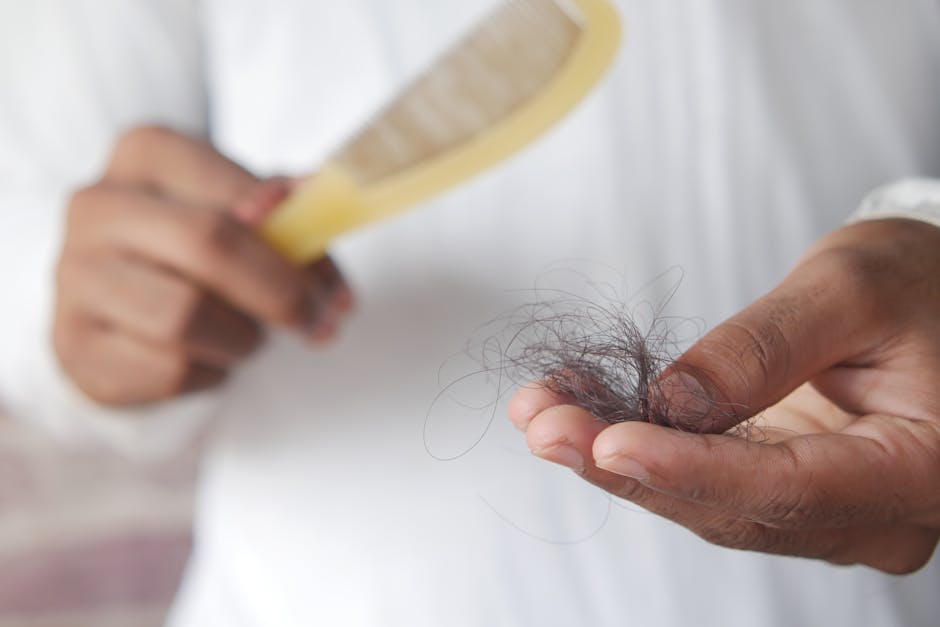
Platelet-rich plasma (PRP) therapy involves drawing a patient’s blood, centrifuging it to concentrate platelets and growth factors, and injecting the resulting plasma into the scalp. The rationale is that concentrated growth factors, including platelet-derived growth factor (PDGF), vascular endothelial growth factor (VEGF), and insulin-like growth factor (IGF-1), stimulate hair follicle activity. The clinical evidence supports a modest benefit for androgenetic alopecia, but study quality has been variable and the effect size is smaller than what is often implied in marketing.
What the Clinical Trials Show
The PRP literature for hair loss includes numerous small randomized controlled trials with mixed results. The most meaningful analyses come from systematic reviews pooling this data.
A 2017 meta-analysis in Dermatologic Surgery analyzed 12 studies involving 460 patients. Overall, PRP produced a mean hair density increase of approximately 45 hairs per cm² in treated versus untreated areas. This represents a statistically significant improvement, though clinical significance varies, 45 hairs per cm² is detectable on dermoscopy and represents meaningful improvement for patients with mild-to-moderate hair loss.
A 2021 systematic review in JAMA Dermatology evaluated 19 randomized trials of PRP for androgenetic alopecia. The review found consistent positive effects on hair count and density but noted substantial heterogeneity in protocols, preparation methods, activation techniques, injection depth, session frequency, and number of sessions varied widely, making definitive conclusions about optimal protocol difficult.
Limitations of the Evidence
Preparation variability: There is no standardized PRP preparation protocol. Platelet concentration, activation method, and final preparation volume differ between providers and devices. Studies use different preparations, which may explain inconsistent results.
No FDA approval for hair loss: PRP is not FDA-approved for androgenetic alopecia. It is used as an off-label application of an FDA-regulated procedure (blood collection and processing). This does not mean it is ineffective, but it means marketing claims are not reviewed by the FDA.
Small studies, short follow-up: Most trials follow patients for 3-6 months. Whether PRP produces durable results beyond one year, or whether repeated sessions are required indefinitely, is not well characterized.
Comparison to established treatments: Few trials directly compare PRP to finasteride or minoxidil. Those that do generally find that finasteride and minoxidil produce comparable or greater hair count improvements. PRP’s potential role is as an adjunct to medical therapy, not a replacement.
Who Is Most Likely to Benefit
PRP appears to produce the best results in:
- Earlier-stage hair loss (Norwood 2-3 rather than 4-6)
- Women with female pattern hair loss (some trials show particularly good response)
- Men and women with active follicles that can respond to growth factor stimulation, advanced scarring or complete follicle loss is not reversible with PRP
What the Procedure Involves
A typical PRP session for hair loss:
- Blood draw (30-60 mL)
- Centrifugation to separate plasma and concentrate platelets (15-20 minutes)
- Optional activation with calcium chloride or thrombin
- Intradermal injections into the scalp at 1 cm intervals across the treatment area
Sessions last approximately 45-60 minutes total. Most protocols recommend 3-4 sessions spaced 4-6 weeks apart, followed by maintenance sessions every 4-6 months. Pain during injection varies from mild to moderate; topical anesthetic is used by most providers.
Cost per session ranges from $500 to $1,500 depending on the provider and market.
The Bottom Line
PRP for hair loss has real evidence behind it, real enough to be offered by academic dermatology programs alongside established treatments. It is not a replacement for finasteride or minoxidil and should not be presented as one. For patients who cannot tolerate oral medications, or as an adjunct to medical therapy, it represents a reasonable option with an acceptable side effect profile (mostly temporary redness and scalp soreness) and a modest but documented benefit.
For medical treatment options by Norwood stage, see The 7 Stages of Male Pattern Baldness Explained. For the comparison of dutasteride and finasteride in clinical evidence, see Dutasteride for Hair Loss: What the Evidence Shows vs. Finasteride.