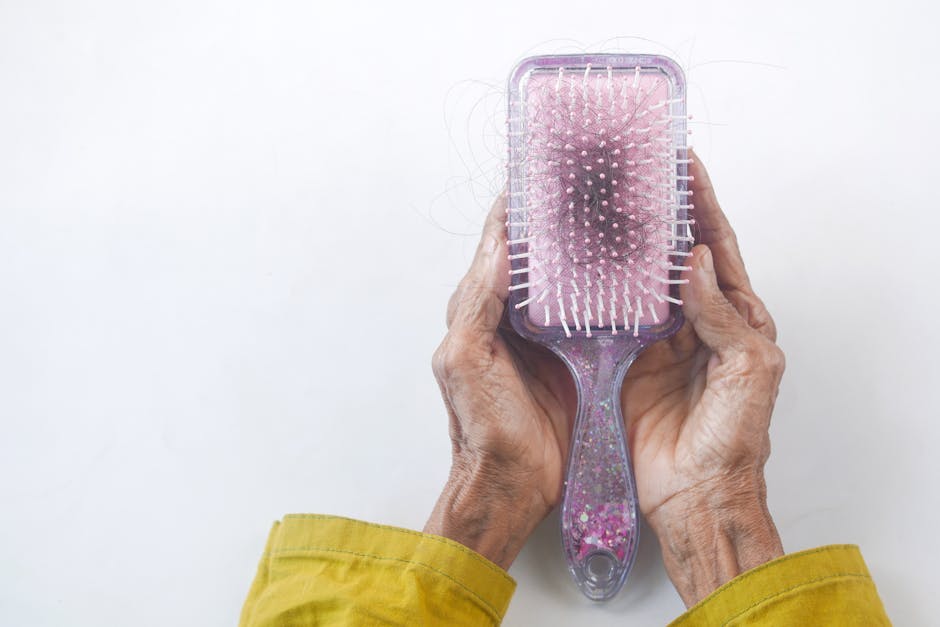
Male pattern baldness is largely genetic, but the claim that you can predict your hair fate by looking at your mother’s father is substantially oversimplified. Androgenetic alopecia is polygenic, influenced by variants in multiple genes, inherited from both parents’ lineages, with environmental factors modulating the timeline and severity. No single gene determines outcome, and no single family member’s hairline is fully predictive.
The AR Gene and the X-Chromosome Connection
The most well-studied genetic factor in male androgenetic alopecia is the androgen receptor (AR) gene, located on the X chromosome. The X-linked inheritance of AR is the origin of the maternal grandfather rule: a man inherits his X chromosome from his mother, who inherited one X from her father. If the maternal grandfather’s AR gene variant confers high androgen receptor sensitivity in scalp follicles, the man may inherit that variant from his mother.
This is a real genetic pathway. Studies have confirmed that the AR gene on chromosome X contributes substantially to androgenetic alopecia risk. Men with certain AR variants have androgen receptors in scalp follicles that are more sensitive to DHT, meaning lower DHT concentrations produce miniaturization than in men with less sensitive variants.
However, the X chromosome AR gene is one contributor among many. A 2017 genome-wide association study (GWAS) published in PLOS Genetics identified 63 genomic regions associated with severe hair loss, involving 287 genetic variants. Most of these variants are on autosomal chromosomes (not X-linked) and are inherited from both parents.
What GWAS Research Shows
Genome-wide association studies have dramatically expanded the picture of androgenetic alopecia genetics. Key findings:
- Polygenic architecture: Hundreds of common genetic variants each contribute a small amount of risk. No single variant determines outcome.
- Both parent contributions: Autosomal genetic risk is inherited equally from maternal and paternal lineages. A man whose father was bald contributes genetic risk just as a man whose maternal grandfather was bald.
- The strongest signals: The AR gene region on X remains the most statistically significant association. But the cumulative effect of dozens of smaller autosomal variants equals or exceeds the AR contribution.
- Non-genetic modulators: Hormonal environment, body fat percentage, chronic stress, and nutritional status all influence when and how severely genetically susceptible follicles miniaturize.
Why Two Brothers Can Have Different Hair Fates
Because androgenetic alopecia is polygenic and the variants involved show significant recombination across generations, full siblings can inherit quite different combinations of risk variants even from the same parents. It is common for one brother to maintain hair well into his 60s while another experiences significant loss in his 30s, despite being raised in the same household and sharing roughly 50% of their genome.
The severity and age of onset also vary within the same person’s lifetime based on hormonal factors. Men who gain significant body fat increase DHT production through aromatase activity and peripheral 5-alpha reductase. Men who develop insulin resistance, sleep poorly, or experience sustained high cortisol may accelerate the progression of genetically predisposed follicle miniaturization.
Can You Predict Your Hairline?
No genetic test currently available provides reliable individual prediction of androgenetic alopecia onset or severity. Direct-to-consumer genetic tests (23andMe, AncestryDNA) report on some AR gene variants but do not capture the full polygenic architecture. Population-level predictors from these tests reflect group averages rather than individual outcomes.
The most useful predictors remain clinical: current hair density compared to photographs from 5-10 years ago, family history across both sides, and early signs of miniaturization detected on trichoscopy.
For what Norwood stages look like and what to do at each, see The 7 Stages of Male Pattern Baldness Explained. For the DHT mechanism behind follicle miniaturization and how finasteride interrupts it, see Finasteride Side Effects: What the Research Actually Shows.