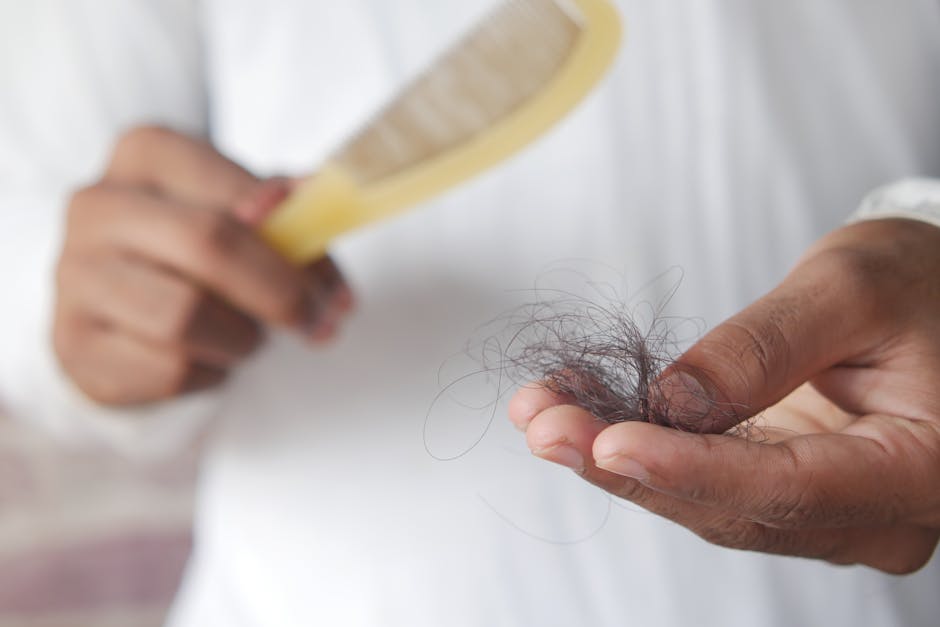
More minoxidil users abandon treatment in months one and two than at any other point in the treatment timeline. The reason is almost always the same: they see increased shedding, conclude the medication is making things worse, and stop. This is a mistake rooted in not understanding what the medication is actually doing.
Minoxidil works. But it works on a timeline that requires patience, and its first visible effect is often more hair falling out.
What Minoxidil Does Biologically
Minoxidil is a vasodilator, originally developed as an oral blood pressure medication. When applied topically, it increases blood flow to hair follicles, extends the anagen (active growth) phase of the hair cycle, and enlarges miniaturized follicles, a mechanism confirmed in biopsy studies.
Hair follicles cycle through three phases: anagen (growth, lasting 2-7 years), catagen (transition, a few weeks), and telogen (rest, followed by shedding, lasting 2-4 months). Minoxidil pushes follicles prematurely into anagen. This sounds like a good thing, and ultimately it is. But follicles entering anagen ahead of schedule first shed the hair from their previous telogen phase.
This is telogen effluvium: a temporary shedding of resting hairs triggered by follicles shifting into growth mode. It is the pharmacological mechanism working correctly, not evidence of failure.
Month by Month
Months 1-2: Most users experience increased shedding. The hair that falls is typically fine or short, often from follicles that were already in telogen. Scalp coverage may look marginally worse than before starting. This is the phase when people most commonly stop treatment, and it is the worst time to do so.
Months 3-4: Shedding typically returns to baseline. New hairs begin to emerge from follicles that have cycled into anagen. These early hairs are often very fine and unpigmented at first, making them difficult to see in normal lighting. Some users start to notice a slight improvement in overall density during this period.
Months 5-8: This is the window where visible improvement becomes apparent to most users. New hairs have had time to grow, thicken, and pigment. Baseline photography taken before starting treatment helps objectively track changes that are easy to underestimate when looking daily. Clinical trial photographs taken at 8 months show meaningful regrowth for men who respond to minoxidil.
Month 12: The peak effect in clinical trials generally occurs around 12 months of continuous use. A Merck-funded study published in the Journal of the American Academy of Dermatology found that 84% of men showed improvement at 12 months on 5% topical minoxidil.
Beyond 12 months, minoxidil maintains the gains it has produced rather than continuing to add new growth. If the medication is continued, the results persist. If it is stopped, they reverse.
What Happens When You Stop
Minoxidil does not cure male pattern baldness. It manages it by keeping follicles in a more active state. Stop the medication and the follicles return to their pre-treatment behavior, which in men with androgenetic alopecia means continuing miniaturization driven by DHT.
Hair loss after stopping minoxidil typically begins within 3 months and reaches the pre-treatment baseline within 6-12 months. The reversal is not dramatic or sudden. It happens gradually, following the normal rate of the underlying condition. But it does happen.
This is why consistent, long-term use is the expectation when starting minoxidil, not a one-year course. Men who want to use it for two years and then stop should factor in that their hair loss trajectory will resume where it left off, possibly with some acceleration in the months after stopping.
5% vs. 2% Concentration
Two concentrations are available over the counter in the United States: 2% solution and 5% solution or foam.
Clinical trial data consistently shows that 5% produces better results. A comparative study published in the Journal of the American Academy of Dermatology found that 5% produced 45% more hair regrowth than 2% at 48 weeks.
The tradeoff is scalp irritation and the vehicle used. The 5% solution uses propylene glycol, which some people find irritating. The 5% foam uses alcohol and butane propellant, which some find easier to tolerate. The 2% solution uses less propylene glycol and causes less irritation for sensitive scalps.
For most men, 5% is the better choice unless irritation is a persistent problem. Switching from 5% solution to 5% foam often resolves irritation issues while maintaining efficacy.
Oral Minoxidil
A lower-dose oral form of minoxidil (0.625 mg to 5 mg daily) has become increasingly common as an alternative to topical application. It eliminates the mess and daily application ritual of topical forms and achieves systemic distribution.
Studies on oral minoxidil for hair loss show efficacy comparable to or greater than topical, with the main side effects being facial and body hair growth (hypertrichosis) and, at higher doses, fluid retention and heart rate changes. The low doses used for hair loss typically produce modest hypertrichosis in some users but rarely cause cardiovascular effects.
Oral minoxidil is not FDA-approved specifically for hair loss, meaning it is prescribed off-label. Physicians and dermatologists prescribe it routinely for this purpose, but the prescribing physician takes on more clinical responsibility compared to recommending an over-the-counter topical.
Setting Realistic Expectations
Minoxidil works best for men with earlier-stage hair loss and for maintaining existing hair rather than recovering advanced loss. At Norwood Stage 2 or 3, it can meaningfully slow progression and sometimes produce visible regrowth. At Stage 5 or 6, it can slow further loss but is unlikely to restore significant density in areas that have been bald for years.
Taking baseline photos before starting treatment is underrated. Monthly photos taken in the same lighting and from the same angle give you objective data rather than the daily comparisons that make progress invisible.
For how finasteride fits alongside minoxidil in a treatment approach, see Finasteride Side Effects: What the Research Actually Shows. For staging your current hair loss to set realistic expectations, see The 7 Stages of Male Pattern Baldness Explained.