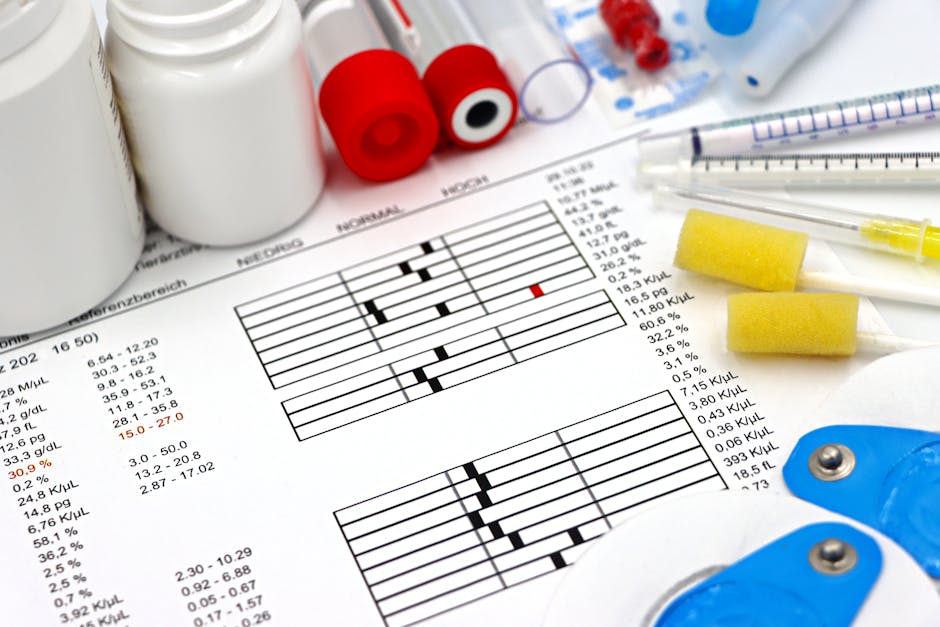
Most people receive their lab results through a patient portal, often before speaking with their doctor. A long list of numbers with unfamiliar abbreviations and “H” or “L” flags next to some values produces anxiety without context. Understanding the basics of how to read a lab report, what the structure means, how reference ranges work, and which findings typically require follow-up versus which are incidental, helps bridge the gap between receiving results and understanding them.
This article covers the most common panels ordered in routine health screening and men’s and women’s health contexts. It is not a substitute for discussion with a clinician, but it provides the vocabulary to have a more productive conversation.
The Structure of a Lab Report
Every lab report typically contains:
Patient and order information: Name, date of birth, ordering physician, date collected, and the lab performing the test.
Test name: The specific measurement. Labs use abbreviations and may report them slightly differently. GLU is glucose, CREA is creatinine, HGB is hemoglobin.
Result: The measured value.
Units: The measurement unit. Critical for interpretation, ng/mL, pg/mL, and nmol/L describe very different magnitudes. Different labs may report the same hormone in different units.
Reference range: The interval of values found in 95% of a healthy reference population. Values outside this range are flagged H (high) or L (low). Critically: being outside the reference range does not automatically mean pathology, and being inside does not rule it out. Reference ranges are population statistics, not personal thresholds.
Flag: H, L, or a critical value flag (HH or LL) indicating a value far outside the reference range that may require urgent attention.
Complete Blood Count (CBC)
The CBC is the most commonly ordered blood test and measures the cellular components of blood.
WBC (white blood cell count): 4.5-11.0 thousand/μL typical range. Elevated WBC may suggest infection, inflammation, or (rarely) blood cell disorders. Low WBC can indicate immune suppression or bone marrow issues.
RBC (red blood cell count): 4.7-6.1 million/μL in men, 4.2-5.4 million/μL in women. Elevated RBC is called erythrocytosis, a known side effect of testosterone replacement therapy.
HGB (hemoglobin): The oxygen-carrying protein in red blood cells. Low HGB indicates anemia. Elevated HGB (polycythemia) can indicate erythrocytosis.
HCT (hematocrit): The percentage of blood volume that is red blood cells. Normal 38-52% in men, 35-47% in women. Elevated hematocrit above 52-54% in men on TRT warrants evaluation.
MCV (mean corpuscular volume): The average size of red blood cells. Low MCV suggests iron deficiency or thalassemia. High MCV suggests B12 or folate deficiency or alcohol excess.
PLT (platelets): Normal 150-400 thousand/μL. Low platelets (thrombocytopenia) can cause bleeding risk.
Complete Metabolic Panel (CMP)
The CMP (also called the basic or complete metabolic panel) assesses kidney function, liver function, and electrolytes.
GLU (glucose): Fasting normal below 100 mg/dL. 100-125 mg/dL = prediabetes. Above 126 mg/dL = diabetes threshold (requires confirmation).
BUN and CREA (blood urea nitrogen, creatinine): Kidney function markers. Elevated creatinine may indicate impaired kidney filtration.
eGFR: Estimated glomerular filtration rate, calculated from creatinine, age, and sex. Below 60 mL/min/1.73m² suggests chronic kidney disease if persistent.
ALT and AST: Liver enzymes. Elevated values indicate liver cell stress or damage from any cause, fatty liver, alcohol, medications, viral hepatitis.
T. BILI (total bilirubin): Liver waste product. Mildly elevated bilirubin that is isolated (other liver tests normal) is often Gilbert’s syndrome, a benign genetic variant affecting bilirubin processing.
Sodium, potassium, chloride, CO2: Electrolytes reflecting fluid balance and kidney function.
Lipid Panel
Total cholesterol: Below 200 mg/dL optimal for most adults. But total cholesterol alone is not a useful predictor, it combines both protective and harmful cholesterol.
LDL (low-density lipoprotein): The primary target of cardiovascular risk management. Optimal below 100 mg/dL for most adults, below 70 mg/dL for those with cardiovascular disease.
HDL (high-density lipoprotein): Protective cholesterol. Above 60 mg/dL is favorable. Below 40 mg/dL in men, below 50 in women, raises cardiovascular risk.
Triglycerides: Normal below 150 mg/dL. Elevated triglycerides are associated with metabolic syndrome, excess carbohydrate intake, and excess alcohol.
Non-HDL cholesterol: Total minus HDL. An increasingly preferred lipid metric because it captures all atherogenic particles. Target below 130 mg/dL for most adults.
Thyroid Panel
TSH (thyroid-stimulating hormone): Normal approximately 0.5-4.5 mIU/L. High TSH indicates the pituitary is working hard to stimulate an underperforming thyroid (hypothyroidism). Low TSH indicates the thyroid is producing too much (hyperthyroidism) or the person is taking more thyroid medication than needed.
Free T4: The active thyroid hormone. Measured when TSH is abnormal to characterize the degree of thyroid dysfunction.
When to Contact Your Doctor
Contact your doctor for:
- Any HH or LL (critical value) flag, these typically trigger automatic provider notification
- H or L flags with symptoms you have been experiencing
- Unexplained abnormal values you do not have a clear explanation for
Do not contact your doctor for single-digit percentage variations above or below reference range with no symptoms and no clear pattern, these often represent normal biological variation or assay variability.
For hormone-specific panel interpretation in men’s health, see How to Read a Hormone Blood Panel: Key Values Explained.