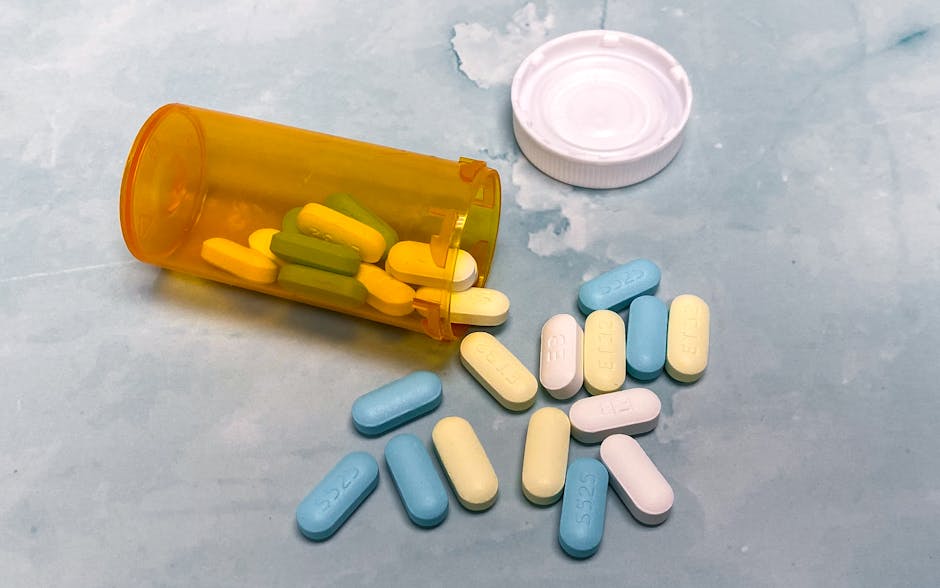
Compounding pharmacies prepare customized medications for patients, mixing, combining, or altering drug ingredients to create formulations not commercially available. The FDA regulates compounding differently from drug manufacturing, and the specific regulatory framework a pharmacy operates under determines the level of quality oversight it receives.
For patients accessing compounded medications through telehealth programs, particularly semaglutide, tirzepatide, testosterone, or other compounds, understanding the regulatory structure clarifies what questions to ask and what guarantees, if any, exist about product quality.
Why Compounding Exists
FDA-approved drug products are manufactured in standardized doses and formulations. Not every patient fits that standard. Common legitimate uses of compounding:
- A child who cannot swallow a pill needs a liquid formulation that does not exist commercially
- A patient allergic to a dye used in the standard tablet formulation needs a version without it
- A medication is unavailable commercially due to shortage
- A combination product does not exist as a single approved drug
Compounding fills these gaps. The relevant legal authority comes from Section 503A and 503B of the Federal Food, Drug, and Cosmetic Act, as amended by the Drug Quality and Security Act of 2013.
Section 503A: Traditional Compounding Pharmacies
503A pharmacies are the traditional model, compounding medications in response to valid prescriptions for individual patients. They are primarily regulated by state pharmacy boards rather than the FDA directly.
Key characteristics:
- Must compound in response to a specific patient prescription
- Cannot make large batches in advance (no “anticipatory compounding” beyond small quantities)
- Not required to follow FDA’s current Good Manufacturing Practice (cGMP) standards
- Products cannot be distributed across state lines
- State board inspections, not FDA inspections, are the primary oversight mechanism
Quality implications: State pharmacy board standards vary. Some states have strong oversight; others have minimal inspection frequency or standards. A 503A pharmacy in one state may operate very differently from one in another. The quality of the final product depends heavily on the individual pharmacy’s practices and the state it operates in.
Section 503B: Outsourcing Facilities
503B outsourcing facilities represent a middle tier created by the 2013 legislation, compounding at larger scale, under more rigorous federal oversight, without requiring individual patient prescriptions for each batch.
Key characteristics:
- Registered with the FDA
- Must meet cGMP standards, the same manufacturing quality framework that applies to pharmaceutical drug manufacturers
- FDA conducts inspections (not just state boards)
- Can compound larger batches and distribute interstate
- Must list their products with the FDA
- Can compound from drug shortage lists without individual patient prescriptions
Quality implications: The cGMP requirement and FDA oversight substantially raise the quality floor. 503B facilities are required to test batches for sterility (for injectable products), potency, and purity. The FDA publishes inspection findings publicly, and serious findings can trigger facility closure.
FDA Drug Shortages and Compounding
During official FDA-declared drug shortages, compounding pharmacies gain additional permissions. Both 503A and 503B facilities can compound copies of shortage medications, normally prohibited because it would compete with an approved drug, specifically to address the supply gap.
This is the regulatory basis under which compounded semaglutide became widely available from 2022-2025. When the FDA declared the semaglutide injection shortage ended in early 2025, the permission for compounding copies was revoked, triggering a complex legal and commercial transition that is still ongoing.
Patients using compounded medications that are in this regulatory gray zone, where shortage-based permissions have expired but compounders are contesting the FDA’s position, are using products whose legal status is genuinely uncertain.
How to Verify a Compounding Pharmacy’s Status
For 503B status: The FDA maintains a searchable database of registered outsourcing facilities. If a pharmacy claims 503B status, verify it on this list. If it is not there, it is not operating as a 503B facility regardless of claims.
For 503A state license: Check the state pharmacy board’s license lookup tool for the state where the pharmacy is physically located. Every state pharmacy board publishes licensee information publicly.
FDA inspection reports: For 503B facilities, FDA inspection reports are public through the FDA’s inspection database. A facility with recent serious findings (Form 483 observations) warrants additional scrutiny.
LegitScript verification: LegitScript is an independent organization that verifies online pharmacies against legal and safety standards. Their database is searchable at legitscript.com. Certification does not guarantee product quality but indicates the business passed basic legitimacy checks.
What Patients Cannot Assume
A compounding pharmacy operating legally does not mean its products have the same quality assurance as FDA-approved drugs. 503A pharmacies, in particular, have no cGMP requirement and limited external quality testing mandates. Even 503B facilities, while better regulated than 503A, are not equivalent to drug manufacturers whose every batch of an approved product goes through full stability testing.
For the specific context of compounded semaglutide, see Compounded Semaglutide vs. Brand-Name Ozempic: What Is the Actual Difference?.